
✨ This article was AI edited. Editorial responsibility: MedicineBD.net.
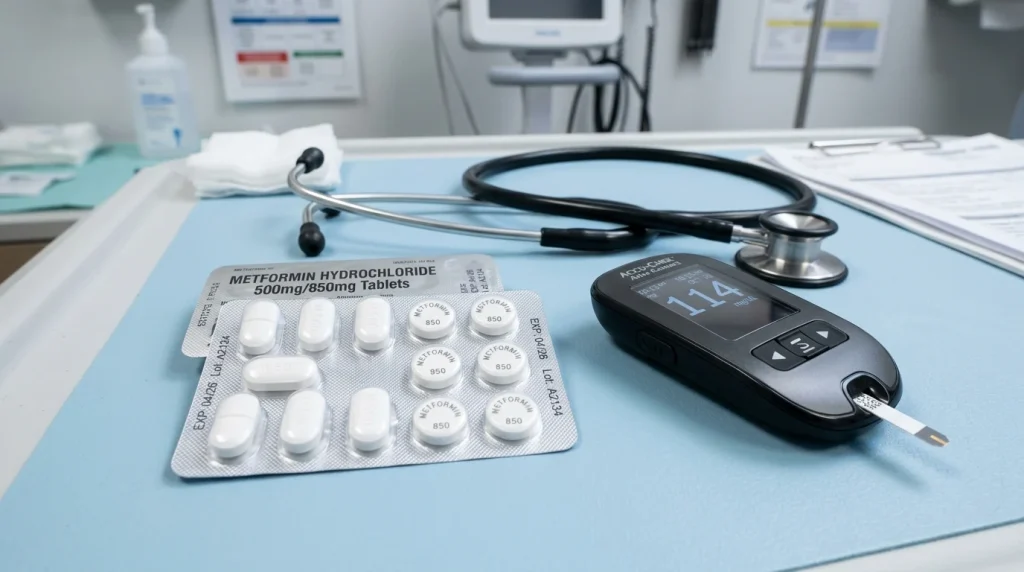
A metformin tablet is the premier, first-line oral biguanide antihyperglycemic medication prescribed worldwide to manage type 2 diabetes mellitus, prediabetes, and polycystic ovary syndrome (PCOS). Available in Immediate-Release (500mg, 850mg, 1000mg) and Extended-Release (500mg, 750mg, 1000mg) formulations, metformin decreases hepatic gluconeogenesis, enhances peripheral insulin sensitivity, and lowers cardiovascular mortality without causing hypoglycemia.
Page Contents
- Molecular Mechanism of Action & Hepatic Physiology
- Clinical Formulations, Strengths & Pharmacokinetics
- Primary Therapeutic Indications & Off-Label Uses
- Clinical Dosing & Titration Protocols
- Renal Dose Adjustments & Contraindications (eGFR Rules)
- Long-Term Vitamin B12 Monitoring Requirement
- Cardiovascular & Metabolic Benefits Beyond Glycemia
- Frequently Asked Questions (FAQ)
- Metformin Before Colonoscopy: When to Stop and Why It Matters
- Metformin for Sale: Where to Buy This Popular Diabetes Drug
- Metformin and Acne: The Unexpected Skin-Clearing Miracle?
- Metformin and Spironolactone: A Dynamic Duo for PCOS Treatment?
- Metformin vs Extended Release: Which Form is Right for You?
- Green Tea and Metformin: A Powerful Combo for Blood Sugar Control?
Molecular Mechanism of Action & Hepatic Physiology
Metformin hydrochloride (1,1-dimethylbiguanide hydrochloride) lowers blood glucose without stimulating pancreatic beta-cell insulin secretion. Its primary molecular target is the mitochondrial respiratory chain complex I in hepatocytes. Transient inhibition of complex I alters the cellular energy state, increasing the adenosine monophosphate (AMP) to adenosine triphosphate (ATP) ratio.
This biochemical shift activates AMP-activated protein kinase (AMPK), which exerts multiple metabolic effects: suppressing key gluconeogenic enzymes (PEPCK and G6Pase), stimulating skeletal muscle glucose uptake via GLUT4 transporter translocation, and activating fatty acid oxidation, which reduces hepatic steatosis and systemic lipid toxicity.
Clinical Formulations, Strengths & Pharmacokinetics
| Formulation Type | Available Strengths | Dosing Frequency | Pharmacokinetic Behavior |
|---|---|---|---|
| Immediate-Release (IR) | 500 mg, 850 mg, 1,000 mg | 2 to 3 times daily with meals | Rapid dissolution; Tmax 2.5 hours; bioavailability ~50–60%; higher initial GI side effect incidence. |
| Extended-Release (ER / XR) | 500 mg, 750 mg, 1,000 mg | Once daily with evening meal | Hydrophilic dual-matrix system; Tmax 7.0 hours; gradual GI diffusion; superior tolerability. |
Primary Therapeutic Indications & Off-Label Uses
1. Type 2 Diabetes Mellitus (First-Line Therapy)
Endorsed by the American Diabetes Association (ADA) and EASD as the foundation of pharmacotherapy. Metformin monotherapy typically reduces baseline HbA1c by 1.5% to 2.0%, reduces fasting plasma glucose by 60–80 mg/dL, and promotes modest, sustainable weight loss (2–4 kg).
2. Polycystic Ovary Syndrome (PCOS – Off-Label)
By lowering circulating fasting insulin, metformin reduces ovarian androgen overproduction, restoring ovulatory menstrual cycles, improving acne/hirsutism, and enhancing fertility in women with insulin-resistant PCOS.
3. Prediabetes & Metabolic Syndrome
Long-term Diabetes Prevention Program (DPP) data proves metformin reduces the 15-year progression risk from impaired fasting glucose to overt type 2 diabetes by 31% (and by over 50% in patients aged < 60 with BMI ≥ 35 kg/m²).
Clinical Dosing & Titration Protocols
- Initiation: Start with 500 mg IR once daily with dinner or 500 mg ER once daily with dinner.
- Titration Schedule: After 7 to 14 days without gastrointestinal intolerance, increase by 500 mg daily until reaching the target therapeutic maintenance dose (typically 1,500 mg to 2,000 mg daily).
- Maximum Dosage Ceiling: 2,550 mg per day for Immediate-Release (in 3 divided doses) or 2,000 mg per day for Extended-Release.
Renal Dose Adjustments & Contraindications (eGFR Rules)
Because metformin is eliminated 100% unchanged via active renal tubular secretion, renal function dictates clinical safety:
- eGFR ≥ 60 mL/min/1.73m²: Standard full dosing allowed; monitor serum creatinine annually.
- eGFR 45–59 mL/min/1.73m²: Standard dosing allowed; monitor renal function every 3 to 6 months.
- eGFR 30–44 mL/min/1.73m²: Maximum daily dose restricted to 1,000 mg per day; initiation not recommended.
- eGFR < 30 mL/min/1.73m²: Strictly contraindicated due to severe accumulation and MALA risk.
Long-Term Vitamin B12 Monitoring Requirement
Chronic metformin use interference with calcium-dependent ileal membrane absorption of the intrinsic factor-vitamin B12 complex can lead to progressive B12 deficiency in up to 30% of patients. Annual serum B12 and methylmalonic acid testing are recommended, with oral cyanocobalamin supplementation (1,000 mcg daily) prescribed when levels fall below 300 pg/mL.
Cardiovascular & Metabolic Benefits Beyond Glycemia
Decades of clinical outcomes data, including landmark findings from the United Kingdom Prospective Diabetes Study (UKPDS), have highlighted significant cardiovascular advantages associated with metformin therapy. Unlike several legacy antidiabetic agents, metformin is associated with a 39% reduction in myocardial infarction risk and a 36% decrease in all-cause mortality. Additionally, by improving systemic insulin signaling and reducing circulating free fatty acids, metformin exerts favorable effects on lipid profiles, mildly decreasing plasma triglycerides and low-density lipoprotein cholesterol (LDL-C).
Frequently Asked Questions (FAQ)
What is a metformin tablet used for?
Metformin is primarily prescribed to lower blood sugar in type 2 diabetes, treat prediabetes, and manage insulin resistance and irregular cycles in polycystic ovary syndrome (PCOS).
What are the common side effects of metformin tablets?
The most common side effects are mild gastrointestinal reactions—nausea, diarrhea, stomach cramping, and a metallic taste in the mouth. These typically subside within 2 to 3 weeks and are significantly reduced by taking the tablet with food or switching to the Extended-Release (ER) version.
Does metformin cause weight loss?
Yes. Unlike insulin or sulfonylureas which promote weight gain, metformin is weight-neutral to mildly weight-reducing, with clinical trials demonstrating an average loss of 4 to 8 pounds over 6 to 12 months.
Can you crush or split metformin extended-release tablets?
No. Metformin ER/XR tablets must be swallowed whole. Crushing, chewing, or splitting damages the slow-release polymer matrix, causing rapid drug dumping and acute stomach upset.
Related posts:
Metformin Before Colonoscopy: When to Stop and Why It Matters
Metformin for Sale: Where to Buy This Popular Diabetes Drug
Metformin and Acne: The Unexpected Skin-Clearing Miracle?
Metformin and Spironolactone: A Dynamic Duo for PCOS Treatment?
Metformin vs Extended Release: Which Form is Right for You?
Green Tea and Metformin: A Powerful Combo for Blood Sugar Control?
Get our latest guides, news, and insights highlighted in your Google Search & AI Overviews.
