
✨ This article was AI edited. Editorial responsibility: MedicineBD.net.
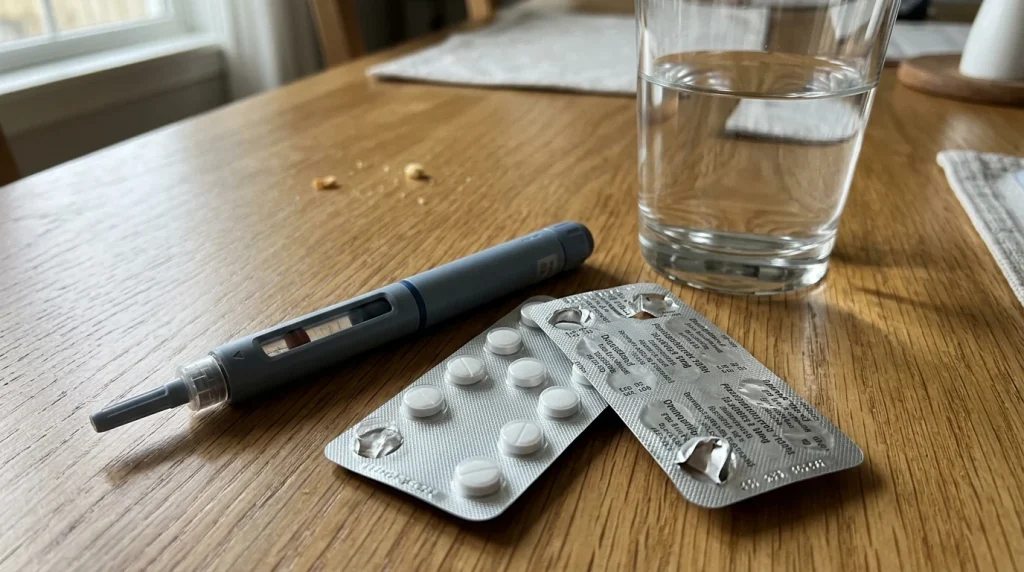
Rybelsus vs Ozempic compares oral versus subcutaneous formulations of the same active peptide, semaglutide, manufactured by Novo Nordisk for type 2 diabetes and metabolic management. While Ozempic delivers semaglutide weekly via pre-filled subcutaneous injection with ~89% bioavailability, Rybelsus delivers daily oral semaglutide paired with the SNAC absorption enhancer, exhibiting ~1% gastrointestinal bioavailability.
Page Contents
- Core Pharmacology: Oral Peptide vs. Subcutaneous Injection
- The SNAC Technology Behind Oral Rybelsus
- Head-to-Head Comparison: Rybelsus vs. Ozempic
- Efficacy Comparison: Clinical Trial Evidence (PIONEER vs. SUSTAIN)
- Practical Administration & Daily Lifestyle Adherence
- Gastrointestinal Tolerability & Adverse Effect Profiles
- Frequently Asked Questions (FAQ)
- Rybelsus vs Jardiance Cost: Which Won't Break the Bank?
- Does Medicare Cover Rybelsus? What You Need to Know Now
- Saxenda vs Rybelsus: Which Will Melt Your Fat Faster?
- Rybelsus to Mounjaro Conversion: Expert Guide Revealed
- Switching from Rybelsus to Mounjaro: Life-Changing Results?
- When to Stop Rybelsus Before Surgery: Critical Timeline Revealed
Core Pharmacology: Oral Peptide vs. Subcutaneous Injection
Semaglutide is a potent glucagon-like peptide-1 (GLP-1) receptor agonist developed by Novo Nordisk. In modern clinical endocrinology, semaglutide is commercially available under two distinct trade names and administration routes: Ozempic (subcutaneous injection) and Rybelsus (oral tablet). While both medications utilize the identical 31-amino-acid synthetic peptide backbone to stimulate glucose-dependent insulin secretion and delay gastric emptying, their pharmacokinetics, bioavailability profiles, and daily administration protocols diverge fundamentally.
Understanding the clinical nuances between Rybelsus and Ozempic enables clinicians and patients to tailor GLP-1 therapy based on needle apprehension, gastrointestinal tolerability, lifestyle constraints, and therapeutic glycemic targets.
The SNAC Technology Behind Oral Rybelsus
Under normal physiological conditions, large peptide molecules cannot be administered orally because gastric acid and proteolytic enzymes (such as pepsin) rapidly denature and digest peptide bonds. To overcome this biological barrier, Novo Nordisk engineered Rybelsus by co-formulating semaglutide with salcaprozate sodium (SNAC), a synthetic fatty acid derivative.
Upon ingestion, SNAC creates a localized, transient micro-environment of elevated pH in the gastric lumen, neutralizing local pepsin activity and protecting the semaglutide molecule from enzymatic degradation. Simultaneously, SNAC induces mild, reversible membrane fluidity alterations in the gastric epithelial mucosa, enabling intact semaglutide to pass directly through the stomach lining into the bloodstream via transcellular passive diffusion. Despite this revolutionary delivery system, the oral bioavailability of Rybelsus is approximately 0.4% to 1.0%, necessitating significantly higher daily milligram doses (e.g., 14 mg daily) compared to weekly microgram injections of Ozempic (e.g., 1.0 mg weekly).
Head-to-Head Comparison: Rybelsus vs. Ozempic
The following clinical comparison matrix contrasts the vital pharmacological, therapeutic, and practical attributes of both semaglutide formulations:
| Parameter | Rybelsus (Oral Semaglutide) | Ozempic (Subcutaneous Semaglutide) |
|---|---|---|
| Active Ingredient | Semaglutide (paired with 300 mg SNAC) | Semaglutide (aqueous solution) |
| Route of Administration | Oral tablet (swallowed whole) | Subcutaneous injection (abdomen, thigh, arm) |
| Dosing Frequency | Once daily (every morning) | Once weekly (same day each week) |
| Available Dosage Strengths | 3 mg, 7 mg, 14 mg tablets | 0.25 mg, 0.5 mg, 1.0 mg, 2.0 mg per pen |
| Bioavailability | ~0.4% to 1.0% (gastric absorption) | ~89% (subcutaneous depot absorption) |
| Time to Steady State | 4 to 5 weeks of daily dosing | 4 to 5 weeks of weekly injections |
| Administration Fasting Rule | Strict: take on empty stomach with ≤120 mL water; wait 30 min before food/drink | None: can be injected any time of day with or without meals |
| Storage Requirements | Room temperature (15°C–25°C) in original blister pack | Refrigerated (2°C–8°C) until first use; 56 days at room temp |
| Average HbA1c Reduction | ~1.0% to 1.4% (at 14 mg dose) | ~1.4% to 1.8% (at 1.0 mg–2.0 mg dose) |
| Average Weight Loss | ~3.7 kg to 4.4 kg (PIONEER trials) | ~4.5 kg to 6.4 kg (SUSTAIN trials) |
| Cardiovascular Outcomes Indication | Demonstrated non-inferiority (SOUL trial completed) | FDA & Health Canada approved for MACE reduction |
Efficacy Comparison: Clinical Trial Evidence (PIONEER vs. SUSTAIN)
Direct and indirect clinical trial data provide clear benchmarks on how these two delivery modalities perform regarding glycemic control and metabolic parameters:
1. HbA1c Reduction
The landmark SUSTAIN clinical trial program evaluated weekly Ozempic, demonstrating superior reductions in glycosylated hemoglobin (HbA1c) averaging 1.5% to 1.8% from baseline at the 1.0 mg dose. In comparison, the PIONEER trial series evaluated oral Rybelsus, showing mean HbA1c reductions of 1.2% to 1.4% at the maximum 14 mg daily dose. In head-to-head comparison in the PIONEER 6 and PIONEER 4 trials, subcutaneous semaglutide consistently exhibited marginally greater glycemic potency, largely attributable to more consistent plasma concentration stability compared to oral absorption variability.
2. Weight Management and Appetite Suppression
Both medications cause notable weight reduction through centrally mediated satiety enhancement and gastric delay. In clinical trials, patients taking Ozempic 1.0 mg experienced average weight loss of approximately 5.5 kg to 6.4 kg over 30 weeks. Patients receiving Rybelsus 14 mg daily achieved average weight reductions of 4.0 kg to 4.4 kg. The slightly higher weight reduction observed with Ozempic correlates with its higher circulating plasma concentrations and steady-state peak levels.
Practical Administration & Daily Lifestyle Adherence
When selecting between Rybelsus and Ozempic, real-world lifestyle adherence is frequently the deciding factor between therapy continuation and treatment dropout:
The Rigorous Fasting Protocol of Rybelsus
For Rybelsus to be absorbed effectively, the stomach must be completely devoid of food, beverage, and other medications. Patients must ingest the tablet immediately upon waking with a single sip of plain water (no more than 4 ounces or 120 mL). Patients must wait at least 30 minutes before consuming any coffee, tea, breakfast, or other morning oral medications. Taking Rybelsus with juice, milk, or breakfast degrades absorption by up to 90%, rendering the dose clinically ineffective.
The Flexibility of Weekly Ozempic
Ozempic requires only one subcutaneous injection every 7 days. It can be administered at any hour of the day, completely independent of food intake or gastrointestinal fullness. For individuals with irregular shift schedules, frequent morning travel, or complex morning medication regimens (e.g., levothyroxine, bisphosphonates), weekly Ozempic often delivers higher protocol compliance than daily morning fasting requirements.
Gastrointestinal Tolerability & Adverse Effect Profiles
Because both medications deliver the identical active GLP-1 receptor agonist peptide, their adverse event profiles are broadly similar, primarily consisting of transient gastrointestinal symptoms:
- Nausea and Vomiting: Occurs in 15%–20% of patients during initial dose titration. Symptoms typically diminish after 2 to 4 weeks on a stable dose.
- Diarrhea or Constipation: Modulations in gastric transit speed and colonic motility can cause bowel irregularity.
- Abdominal Discomfort & Dyspepsia: Rybelsus can occasionally cause localized gastric irritation due to the local concentration of SNAC against the stomach lining, while Ozempic bypasses the gastric mucosa entirely.
- Injection-Site Reactions: Mild erythema or pruritus occurs in ~1% of Ozempic users, an adverse effect completely absent with oral Rybelsus.
Frequently Asked Questions (FAQ)
Can you switch from Ozempic to Rybelsus?
Yes. Physicians frequently transition patients between formulations. A standard conversion protocol transitions patients on Ozempic 0.5 mg weekly to Rybelsus 7 mg or 14 mg once daily, beginning 7 days after the final Ozempic injection.
Can Rybelsus tablets be split, crushed, or dissolved?
No. Rybelsus tablets must be swallowed whole. Crushing, splitting, or chewing the tablet destroys the SNAC-peptide protective matrix, leading to immediate gastric destruction of semaglutide by stomach acid.
Which is more affordable: Rybelsus or Ozempic?
In most global and North American insurance formularies, the monthly retail and co-pay tiering for Rybelsus (30 tablets) and Ozempic (one multi-dose pen) are priced competitively. However, provincial formulary coverage in Canada and prior authorization criteria in the United States vary depending on primary type 2 diabetes diagnosis.
Is Rybelsus as effective as Ozempic for weight loss?
While both induce significant weight loss, clinical trials indicate that Ozempic 1.0 mg and 2.0 mg injections yield slightly greater average weight reduction (approximately 1 to 2 kg more) compared to Rybelsus 14 mg daily, due to higher and more consistent systemic bioavailability.
Disclaimer: This comparative clinical review is intended for educational purposes and does not substitute for personalized medical diagnosis or treatment. Consult your prescribing physician or endocrinologist to determine whether oral or injectable GLP-1 therapy best aligns with your clinical metabolic profile.
Related posts:
Rybelsus vs Jardiance Cost: Which Won't Break the Bank?
Does Medicare Cover Rybelsus? What You Need to Know Now
Saxenda vs Rybelsus: Which Will Melt Your Fat Faster?
Rybelsus to Mounjaro Conversion: Expert Guide Revealed
Switching from Rybelsus to Mounjaro: Life-Changing Results?
When to Stop Rybelsus Before Surgery: Critical Timeline Revealed
Get our latest guides, news, and insights highlighted in your Google Search & AI Overviews.
