
✨ This article was AI edited. Editorial responsibility: MedicineBD.net.
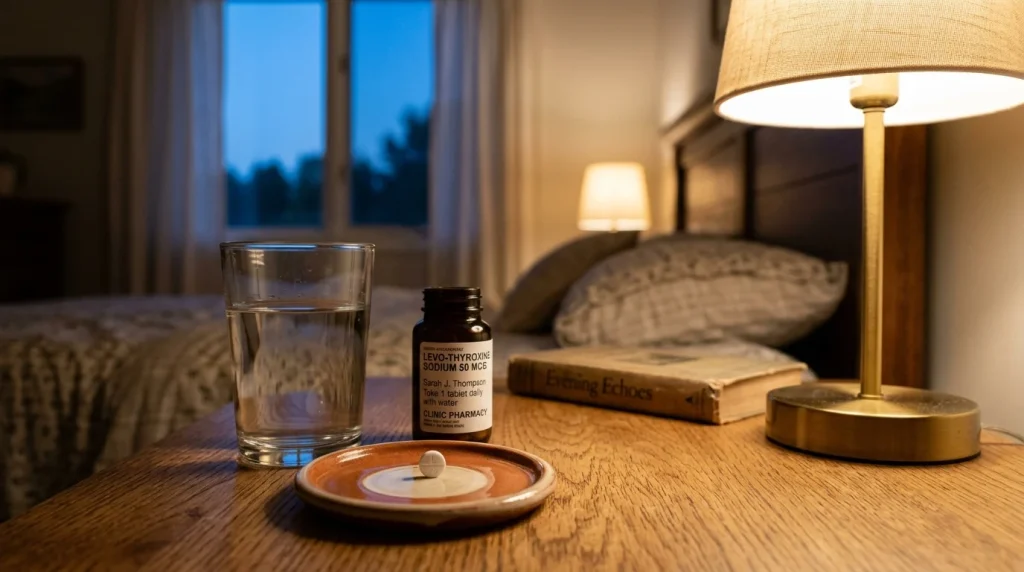
Taking a thyroid pill (levothyroxine) in the early evening or at bedtime is a clinically validated alternative to morning administration, provided it is taken on an empty stomach at least 3 to 4 hours after dinner. Evening dosing may even enhance intestinal absorption and circadian TSH normalization due to slower nighttime gastrointestinal transit.
Page Contents
- Pharmacokinetics of Levothyroxine Absorption
- Morning vs. Evening Thyroid Dosing: Clinical Comparison
- The 4-Hour Evening Fasting Rule
- Critical Drug and Nutrient Interactions to Avoid in the Evening
- Circadian Rhythms of TSH and Thyroid Hormones
- Step-by-Step Protocol to Transition from Morning to Evening Dosing
- Frequently Asked Questions (FAQ)
- Accidentally Took Husband's Blood Pressure Medication? The Surprising Effects
- Rivotril in English: Comprehensive Guide and Usage
- Oleanz 2.5 Composition: Understanding the Ingredients
- Ozempic: What Happens If It Isn't Refrigerated?
- Amoxicillin and Clavulanate Potassium Forgot to Refrigerate: Risks?
- Are Hemp Hearts Still Good If Forgot to Refrigerate?
Pharmacokinetics of Levothyroxine Absorption
Levothyroxine sodium (synthetic T4) is the primary hormonal replacement therapy for primary, secondary, and tertiary hypothyroidism. Absorption occurs primarily in the jejunum and ileum, exhibiting a baseline bioavailability of 60% to 80% under optimal fasting conditions. Because gastric acidity (pH < 2.0) is essential for dissolving the tablet matrix and facilitating enteric absorption, the presence of food, dietary fibers, and polyvalent cations in the digestive tract significantly reduces hormone bioavailability.
While traditional endocrinology guidelines advocate for morning dosing 30 to 60 minutes prior to breakfast, clinical evidence indicates that evening or bedtime dosing can be equally or more effective for patients struggling with morning routines.
Morning vs. Evening Thyroid Dosing: Clinical Comparison
| Parameter | Morning Administration | Evening / Bedtime Administration | Clinical Significance |
|---|---|---|---|
| Fasting Requirement | Overnight fast; wait 30–60 min before breakfast or coffee | Fast for 3–4 hours after dinner; nothing except water | Evening requires strict discipline regarding late-night snacking |
| Gastrointestinal Motility | Active daytime peristalsis | Slower nocturnal bowel motility | Prolonged mucosal contact in ileum can increase T4 uptake |
| TSH & Free T4 Stability | Baseline reference standard | Demonstrated slight reduction in TSH and higher Free T4 in RCTs | JAMA Internal Medicine trials confirmed non-inferiority/superiority of bedtime dosing |
| Supplement Conflicts | Must delay morning calcium, iron, or multivitamins by 4 hours | Supplements taken at morning/lunch do not interfere | Easier compliance for patients taking multi-drug regimens |
The 4-Hour Evening Fasting Rule
The single greatest obstacle to successful early evening or bedtime thyroid dosing is dietary interference. Dinner typically contains complex proteins, lipids, and dietary fibers that delay gastric emptying for several hours.
Mandatory Fasting Protocol:
- Finish Dinner by 6:00 PM – 7:00 PM: Allow a minimum 3 to 4-hour window before taking levothyroxine at 10:00 PM – 11:00 PM.
- Zero Late-Night Snacks: Consuming milk, fruit, chips, or alcohol during the post-dinner window binds active levothyroxine molecules and impairs absorption.
- Take Only with Full Glass of Plain Water: Avoid swallowing tablets with juice, tea, milk, or herbal infusions. A full 8-ounce glass of water ensures the tablet transits into the stomach and dissolves promptly.
Critical Drug and Nutrient Interactions to Avoid in the Evening
Numerous compounds form unabsorbable chelates or alter gastric pH, severely reducing levothyroxine absorption. Maintain at least a 4-hour separation between levothyroxine and:
- Calcium Carbonate & Calcium Citrate: Forms insoluble complexes with levothyroxine in the intestinal lumen.
- Iron Salts (Ferrous Sulfate): Direct chemical binding prevents hormonal diffusion across the enterocyte membrane.
- Proton Pump Inhibitors (PPIs) & Antacids: Omeprazole, pantoprazole, and aluminum/magnesium hydroxide elevate gastric pH, decreasing tablet dissolution kinetics.
- Cholesterol Bile Acid Sequestrants: Cholestyramine and colesevelam bind thyroid hormone in the gut lumen.
- Soy, High-Fiber Meals, and Walnuts: Dietary fiber and soy isoflavones bind T4, requiring dosage escalation if diet is not consistent.
Circadian Rhythms of TSH and Thyroid Hormones
Endogenous Thyroid-Stimulating Hormone (TSH) secretion exhibits a marked circadian rhythm, with plasma concentrations rising in the late evening, peaking between 2:00 AM and 4:00 AM, and declining to daytime nadirs. Bedtime administration aligns exogenous T4 availability with the natural overnight peak of peripheral deiodinase activity (the enzymatic conversion of T4 to active T3 in liver and kidney tissues), supporting physiological metabolic homeostasis upon waking.
Step-by-Step Protocol to Transition from Morning to Evening Dosing
If you and your endocrinologist decide to switch your thyroid pill from morning to evening, follow this safe transition protocol:
- Day 1: Take your usual prescribed morning dose upon waking.
- Day 1 Evening: Do NOT take an evening pill (prevents double-dosing on the same calendar day).
- Day 2 Morning: Skip your morning dose.
- Day 2 Evening: Take your prescribed dose at bedtime (ensuring a 3 to 4-hour post-dinner fast).
- Schedule Follow-Up Labs at 6 to 8 Weeks: Recheck serum TSH and Free T4 levels after 6 to 8 weeks of consistent evening dosing to confirm hormonal stability and adjust dosage if bioavailability increases.
Frequently Asked Questions (FAQ)
Is it better to take thyroid medication at night or in the morning?
Neither timing is inherently superior for all patients; consistency and strict fasting are what matter most. Clinical trials demonstrate that bedtime dosing achieves equal or slightly better TSH reduction compared to morning dosing, provided you consistently maintain an empty stomach for 3 to 4 hours after dinner.
Can taking my thyroid pill in the evening cause insomnia?
For the vast majority of patients with appropriately titrated dosages, evening levothyroxine does not cause insomnia. T4 is a slow-acting prohormone with a 7-day half-life. However, if your dosage is excessively high (hyperthyroid state), palpitations and sleep disruption can occur regardless of administration time.
What should I do if I eat a late dinner?
If you have dinner late (e.g., 9:30 PM), do not take your thyroid pill immediately afterward. It is preferable to take that single dose the next morning upon waking (waiting 30 to 60 minutes before breakfast), or delay your bedtime pill until you have completed at least 3 hours of fasting.
Can I drink herbal tea or wine after taking my evening thyroid pill?
No. You should drink only plain water with your thyroid medication. Alcohol, herbal teas, and dairy beverages can interfere with gastric acidity, drug solubility, and intestinal transit.
Related posts:
Accidentally Took Husband's Blood Pressure Medication? The Surprising Effects
Rivotril in English: Comprehensive Guide and Usage
Oleanz 2.5 Composition: Understanding the Ingredients
Ozempic: What Happens If It Isn't Refrigerated?
Amoxicillin and Clavulanate Potassium Forgot to Refrigerate: Risks?
Are Hemp Hearts Still Good If Forgot to Refrigerate?
Get our latest guides, news, and insights highlighted in your Google Search & AI Overviews.
