
✨ This article was AI edited. Editorial responsibility: MedicineBD.net.
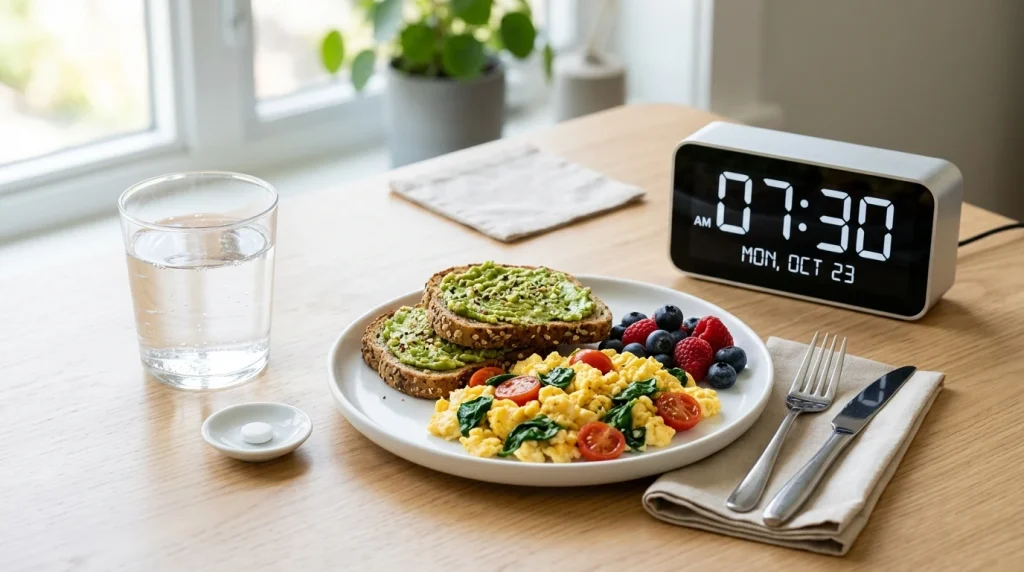
The optimal time to take metformin depends on your formulation: Immediate-Release (IR) metformin should be taken twice daily with breakfast and dinner to minimize gastrointestinal side effects, while Extended-Release (ER/XR) metformin is most effectively taken once daily with your evening meal (dinner) to suppress nocturnal hepatic glucose production and dawn phenomenon hyperglycemia.
Page Contents
- Chronopharmacology of Metformin & Hepatic Gluconeogenesis
- Timing Protocols by Metformin Formulation & Dosing Regimen
- The Critical Importance of Taking Metformin with Food
- Timing Interactions with Other Diabetes Medications
- What to Do If You Take Metformin at the Wrong Time
- Frequently Asked Questions (FAQ)
- Metformin and Inositol: The Perfect Pair for PCOS Management?
- Metformin Sex Side Effects: The Bedroom Secret No One's Talking About
- Metformin and Semaglutide: A Powerful Duo for Diabetes Management
- Letrozole and Metformin: A Powerful Duo for PCOS Treatment
- Metformina Hígado Graso: El Remedio Sorprendente Que Nadie Te Contó
- Metformin for Fatty Liver: Dosage Guidelines and Effectiveness
Chronopharmacology of Metformin & Hepatic Gluconeogenesis
Metformin exerts its primary antihyperglycemic effect by activating AMP-activated protein kinase (AMPK) in hepatocytes, which downregulates gene expression of key gluconeogenic enzymes (phosphoenolpyruvate carboxykinase and glucose-6-phosphatase). This suppresses excessive glucose production by the liver.
In patients with type 2 diabetes, hepatic glucose output peaks during the early morning hours (between 4:00 AM and 8:00 AM) due to circadian surges in cortisol, growth hormone, and glucagon—a physiological pattern termed the dawn phenomenon. Strategically timing metformin administration maximizes plasma drug availability precisely when hepatic glucose synthesis is highest.
Timing Protocols by Metformin Formulation & Dosing Regimen
| Prescription Regimen | Formulation Type | Recommended Timing | Clinical Rationale |
|---|---|---|---|
| Once-Daily Extended-Release | Metformin ER / XR (500mg, 1000mg) | With Dinner / Evening Meal | Releases continuously over 8–10 hours; provides peak suppression of overnight fasting glucose surges. |
| Twice-Daily Immediate-Release | Metformin IR (500mg, 850mg, 1000mg) | With Breakfast & With Dinner | Divides total drug exposure across the day; meal buffering prevents severe gastric irritation and diarrhea. |
| Three-Times-Daily Regimen | Metformin IR (500mg or 850mg) | With Breakfast, Lunch, & Dinner | Utilized for maximum dosage limits (up to 2,550 mg/day) to maintain steady therapeutic blood levels. |
The Critical Importance of Taking Metformin with Food
Regardless of whether you take immediate-release or extended-release metformin, always take your dose with a meal or substantial snack rather than on an empty stomach. Taking metformin with food accomplishes three key physiological benefits:
- Buffers Enteric Mucosa: Metformin concentrates heavily in intestinal epithelial cells. Ingesting food slows dissolution and reduces localized mucosal irritation.
- Prevents Osmotic Diarrhea: Food balances intestinal osmotic gradients, preventing the sudden shift of water into the bowel lumen that triggers loose watery stools.
- Slightly Prolongs Absorption: Co-ingestion with complex carbohydrates and dietary fiber smooths out plasma drug peaks, resulting in a more sustained therapeutic effect.
Timing Interactions with Other Diabetes Medications
When metformin is prescribed as part of a combination regimen with other antidiabetic agents, coordination of administration timing is vital for safety:
- Sulfonylureas (Glimepiride, Glipizide): Must be taken with the first main meal of the day. Unlike metformin, sulfonylureas directly stimulate insulin release; failing to eat immediately after dosing can cause severe hypoglycemia.
- SGLT2 Inhibitors (Empagliflozin, Dapagliflozin): Usually taken once daily in the morning with or without food. Can be safely co-administered with morning metformin.
- GLP-1 Injections (Ozempic, Mounjaro): Administered once weekly regardless of meal timing. Metformin should continue on its daily schedule without modification.
- Basal Insulin (Glargine, Degludec): Typically injected at bedtime; works synergistically with evening extended-release metformin to stabilize overnight hepatic glucose output.
What to Do If You Take Metformin at the Wrong Time
1. Missed a Morning Dose (Immediate-Release)
If you remember within 2 to 3 hours of breakfast, take your dose immediately with a snack. If it is already close to lunchtime or dinner, skip the missed morning tablet and take your standard evening dose with dinner. Never take two doses at the same time to make up for a forgotten pill.
2. Missed an Evening Dose (Extended-Release)
If you realize before going to sleep, take the ER tablet with a small light snack (e.g., a slice of whole-wheat bread or yogurt). If you only remember the following morning, take your prescribed dose with breakfast and resume your normal evening schedule with dinner that night.
Frequently Asked Questions (FAQ)
Is it better to take metformin in the morning or at night?
For extended-release (ER/XR) metformin, taking it at night with dinner is generally superior because it provides maximum suppression of liver glucose release during the early morning hours (dawn phenomenon). For immediate-release metformin, dividing doses between morning breakfast and evening dinner is standard.
Can I take metformin before or after meals?
It is best taken midway through your meal or immediately after finishing eating. Taking it before meals on an empty stomach significantly increases the risk of stomach cramps, nausea, and loose stools.
What happens if I take metformin on an empty stomach?
Taking metformin on an empty stomach does not cause severe hypoglycemia, but it will frequently trigger acute gastrointestinal upset, including nausea, metallic taste, stomach cramps, and explosive diarrhea.
Should I stop taking metformin if I am fasting for blood work or surgery?
For routine fasting blood work, hold your morning metformin until after your blood is drawn and you eat breakfast. For surgical procedures involving anesthesia or iodinated radiocontrast imaging, guidelines require holding metformin 48 hours prior to prevent acute renal strain.
Related posts:
Metformin and Inositol: The Perfect Pair for PCOS Management?
Metformin Sex Side Effects: The Bedroom Secret No One's Talking About
Metformin and Semaglutide: A Powerful Duo for Diabetes Management
Letrozole and Metformin: A Powerful Duo for PCOS Treatment
Metformina Hígado Graso: El Remedio Sorprendente Que Nadie Te Contó
Metformin for Fatty Liver: Dosage Guidelines and Effectiveness
Get our latest guides, news, and insights highlighted in your Google Search & AI Overviews.
