
✨ This article was AI edited. Editorial responsibility: MedicineBD.net.
Mounjaro injection problems typically fall into two categories: mechanical autoinjector failures (pen jamming, button stuck, fluid leaking) and cutaneous injection site reactions (erythema, bruising, localized pruritus, or subcutaneous nodules). Following standardized subcutaneous administration protocols and rotating injection sites resolves over 90% of user-reported issues.
Page Contents
- Clinical Overview of Subcutaneous Drug Delivery Issues
- Troubleshooting Common Mounjaro Injection Problems
- Anatomical Injection Site Selection & Rotation Strategy
- What to Do If the Pen Completely Fails / Misfires
- Frequently Asked Questions (FAQ)
- Mounjaro Misfire: What to Do If Your Pen Fails
- Mounjaro Miami: Sizzling Hot Deals in the Magic City
- Mounjaro San Francisco: Bay Area's Secret to Shedding Pounds
- Mounjaro Forum: Join the Conversation That's Changing Lives
- Why is Mounjaro Not Working? Plausable Reasons & Solutions
- Mounjaro Reviews: What Users Are Really Saying
Clinical Overview of Subcutaneous Drug Delivery Issues
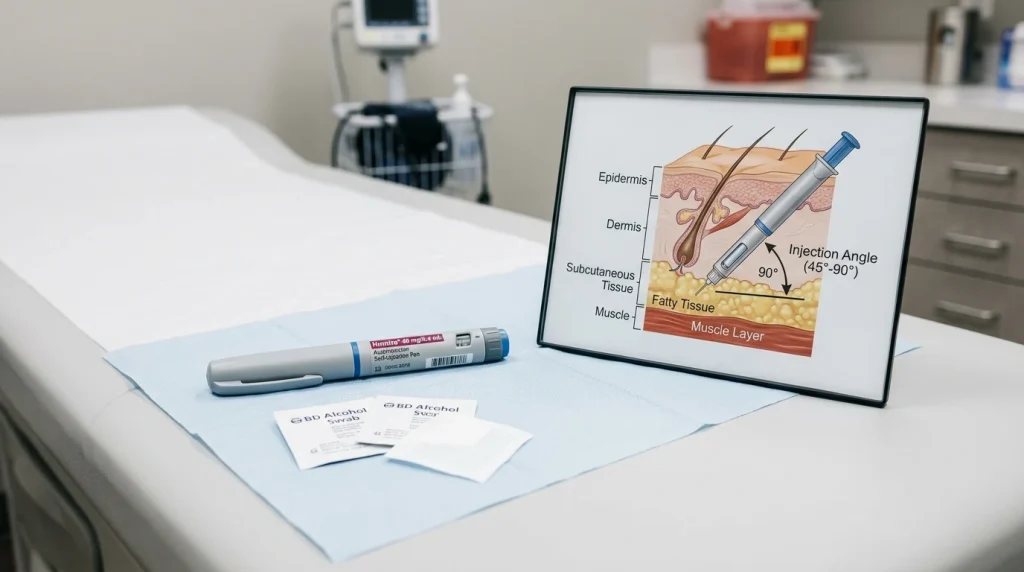
Mounjaro (tirzepatide) is formulated for subcutaneous administration into the adipose layer beneath the skin. Proper drug absorption depends on consistent dermal penetration without intramuscular or intradermal misplacement. Although Eli Lilly’s single-dose autoinjector is engineered for user simplicity, mechanical mishandling and localized immunological skin reactions can disrupt weekly therapy.
Differentiating between true device malfunction, user execution errors, and expected local tissue reactions enables patients to protect their medication supply and maintain treatment compliance.
Troubleshooting Common Mounjaro Injection Problems
| Problem / Symptom | Probable Clinical Cause | Immediate Patient Action | Prevention Protocol |
|---|---|---|---|
| Purple Button Won’t Depress | Lock ring not fully turned to the unlocked position; pen angled improperly | Firmly rotate the lock ring until the arrow aligns with the green unlocked icon. | Hold the pen flush against the skin at a 90-degree angle before unlocking. |
| Medication Leaking on Skin | Pen removed before second click; needle withdrawn prematurely (< 10 seconds) | Gently dab with sterile gauze. Do NOT administer a second pen. | Count slowly to 10 after hearing the first click until the second click sounds. |
| Injection Site Redness & Itching | Localized histamine release / mild hypersensitivity to inactive excipients | Apply a cool compress and topical 1% hydrocortisone cream. | Allow cold pen to reach room temperature (30 min) before injecting; rotate sites. |
| Bruising or Bleeding | Needle pierced a superficial capillary bed; excessive manual pressure | Apply light pressure with cotton ball. Do not rub or massage the area. | Hold pen firmly but gently against skin; avoid injecting directly into visible veins. |
| Subcutaneous Hard Lump / Knot | Lipohypertrophy from repeated injections in the exact same anatomical spot | Allow lump to resolve naturally over several weeks; do not inject into the lump. | Strictly rotate injection sites between abdomen, thigh, and upper arm. |
Anatomical Injection Site Selection & Rotation Strategy
To ensure consistent pharmacokinetics and avoid localized tissue trauma, rotate your subcutaneous injection site every week among the three approved anatomical zones:
1. Abdomen (Most Common & Recommended)
Inject at least 2 inches (5 cm) away from the navel. Avoid the beltline or areas with stretch marks, surgical scars, or skin irritation.
2. Front of Thighs
Inject into the upper, outer quadrant of the anterior thigh. Thigh injections frequently result in lower rates of reported nausea compared to abdominal injections in clinical practice.
3. Back of Upper Arm (Requires Assistance)
Inject into the fatty outer area of the tricep region. Because this site requires two hands, it should only be performed with the assistance of a caregiver or healthcare professional.
What to Do If the Pen Completely Fails / Misfires
If an autoinjector fails due to an authentic mechanical defect (such as the spring triggering without needle extension, the needle bending, or the glass barrel breaking inside the housing):
- Do NOT Throw the Pen Away: Retain the defective pen, base cap, and original carton containing the lot number and expiration date.
- Do NOT Re-Inject Another Dose: Contact your prescribing physician or pharmacist first to confirm whether any medication was absorbed.
- Contact Eli Lilly Customer Support: In the United States, call Eli Lilly at 1-800-LillyRx (1-800-545-5979). Report the device failure; after verifying the lot details, manufacturers routinely issue a replacement voucher for your pharmacy.
Frequently Asked Questions (FAQ)
Is it normal to see liquid on my skin after Mounjaro injection?
A single tiny droplet of fluid on the skin is normal. However, if a stream of liquid runs down your skin and the gray plunger did not move, the pen misfired or was removed too quickly. Do not inject another pen; contact your doctor.
Why does Mounjaro sting or burn when injecting?
Injecting cold solution straight from the refrigerator can cause a brief burning sensation. Allowing your pen to sit at room temperature for 30 to 45 minutes before injecting significantly reduces discomfort.
Can I inject Mounjaro in my buttocks?
No. The buttocks are not an FDA-approved injection site for Mounjaro. Clinical trials evaluated only the abdomen, anterior thighs, and upper arms for consistent bioavailability.
Related posts:
Mounjaro Misfire: What to Do If Your Pen Fails
Mounjaro Miami: Sizzling Hot Deals in the Magic City
Mounjaro San Francisco: Bay Area's Secret to Shedding Pounds
Mounjaro Forum: Join the Conversation That's Changing Lives
Why is Mounjaro Not Working? Plausable Reasons & Solutions
Mounjaro Reviews: What Users Are Really Saying
Get our latest guides, news, and insights highlighted in your Google Search & AI Overviews.
